Harness vs Collar for Older Dogs: What's Safer?
Compare harnesses and collars for senior dogs. Learn why harnesses are safer for aging dogs, which type to choose, and our top picks.
That collar your dog has worn for years might be doing more harm than you realize. As dogs age, their necks become more vulnerable -- tracheal tissue weakens, cervical discs degenerate, and thyroid glands sit right in the pressure zone. For senior dogs, the harness vs. collar question is not just about walking convenience. It is about protecting vulnerable anatomy and providing the support your aging dog increasingly needs.
Quick Comparison Picks

Ruffwear Ruffwear Front Range Harness
Padded, everyday harness with front and back clip points
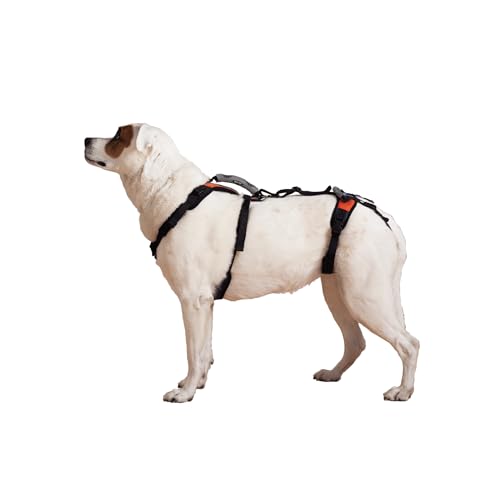
Help 'Em Up GingerLead Support Harness
Rehabilitation sling harness for mobility support on walks
Help 'Em Up Rabbitgoo No-Pull Dog Harness
Budget-friendly padded harness with reflective strips
Help 'Em Up Julius-K9 IDC Powerharness
Premium heavy-duty harness with side handle for large breeds
Quick Verdict
For walking, choose a harness -- it is safer for virtually every senior dog. Harnesses distribute force across the chest and shoulders, protect the trachea and neck, and provide better support for dogs with mobility issues. Keep a collar for ID tags only. The only scenario where a collar might be acceptable for leash walking is a senior dog that walks perfectly on a loose leash with zero pulling, and even then, a harness is still the better choice.
The Clear Winner
For senior dogs, a harness is almost always the safer, better choice for leash attachment. Keep a lightweight collar with ID tags on your dog at all times, but walk with the leash clipped to a well-fitted harness.
Why Collars Can Be Dangerous for Senior Dogs
Collars concentrate all leash force on a narrow band around your dog's neck -- an area packed with sensitive structures that become more vulnerable with age:
- Trachea (windpipe): The tracheal cartilage rings weaken with age, and collar pressure can worsen or cause tracheal collapse, especially in small breeds
- Thyroid gland: Located in the neck, it can be impacted by chronic collar pressure
- Cervical spine: Older dogs commonly develop degenerative disc disease in the neck. Collar jerks and sustained pressure can aggravate spinal issues
- Blood vessels and nerves: The carotid arteries, jugular veins, and vagus nerve all run through the neck area
- Esophagus: Collar pressure can worsen acid reflux, which is more common in senior dogs
A 2006 study found that dogs wearing collars experienced significantly higher intraocular pressure (pressure in the eyes) when pulling compared to dogs wearing harnesses. This is especially concerning for senior dogs prone to glaucoma.

Why Harnesses Are Better for Senior Dogs
A good harness does more than just avoid neck pressure. For aging dogs, it provides active benefits:
- Force distribution: Spreads pulling force across the chest, shoulders, and back -- stronger body areas that can handle it
- Mobility support: Many harnesses have top handles that let you assist your dog on stairs, over curbs, or when standing up
- Fall prevention: Better control helps prevent sudden lunges or stumbles that could injure aging joints
- Comfort on long walks: Padded harnesses reduce friction and pressure points during extended outings
- Support for weak hind legs: Full-body and rear-support harnesses can help dogs with hind leg weakness maintain stability
Types of Harnesses for Senior Dogs
Standard Walking Harnesses
These are everyday walking harnesses with chest and back leash attachment points. They work for any senior dog that is still mobile and just needs safer leash attachment. Look for padded versions with adjustable straps.
Support/Lift Harnesses
Designed specifically for dogs with mobility issues, these harnesses include handles and slings that allow you to provide physical support. Some models focus on the front end, some on the rear (for dogs with weak hind legs), and some support the whole body. These are ideal for dogs recovering from surgery or those with progressive mobility loss.
No-Pull Harnesses
If your senior dog still pulls on walks, a front-clip harness can help manage this without the risks of a collar or prong collar. However, choose carefully -- the turning motion of front-clip designs can be jarring for arthritic dogs. A dual-clip harness gives you both options.
Side-by-Side Comparison
| Factor | Harness | Collar |
|---|---|---|
| Neck pressure | None | Direct, concentrated pressure |
| Trachea safety | Excellent | Risk of damage, especially with pulling |
| Spinal impact | Minimal | Can aggravate cervical disc issues |
| Mobility support | Can assist with handles/slings | No support capability |
| Ease of putting on | Moderate (depends on design) | Very easy |
| ID tag carrying | Some have tag rings | Excellent for tags |
| Pull control | Good (especially front-clip) | Moderate |
| Price range | $15-$60 | $8-$25 |

When a Collar Is Still Okay
Despite our strong recommendation for harnesses, there are limited situations where a collar is acceptable:
- ID carrying only: A lightweight flat collar with tags should be worn at all times for identification, but the leash should attach to the harness
- Perfect loose-leash walkers: If your dog genuinely never puts tension on the leash, a wide padded collar creates minimal risk (though a harness is still better)
- Temporary indoor use: A quick trip to the yard on a leash in a collar is lower risk than sustained walking
Collars to Absolutely Avoid for Senior Dogs
- Choke chains: Extremely dangerous for aging necks and tracheas
- Prong/pinch collars: Can cause cervical injury and are unnecessary with proper harness use
- Slip leads: Tighten around the neck and can cause significant tracheal pressure
- Narrow collars: Concentrate force on a smaller area, increasing pressure per square inch
Top Pick for Most Senior Dogs
Ruffwear Front Range Harness features padded chest and belly panels, two leash attachment points (front and back), and four adjustment points for a custom fit. It is easy to put on and comfortable for daily walks.
Check Price on AmazonOur Recommendation
Switch your senior dog to a harness for all leash walking. Keep a lightweight collar with ID tags on at all times, but never clip the leash to it. For most senior dogs, a standard padded walking harness with back-clip attachment is perfect. If your dog has mobility issues or weak hind legs, invest in a support harness with a top handle for providing stability assistance.
The transition to a harness is one of the simplest, most impactful changes you can make for your aging dog's comfort and safety. Most dogs adapt within a few walks.
Related Guides
- Best Harnesses for Senior Dogs - Full reviews and fitting guide
- Arthritis in Senior Dogs - Complete management guide
- How to Help an Old Dog Get Up - Practical lifting and support tips
- Old Dog Back Legs Giving Out - Causes and solutions
Pet Insurance · Sponsored
Protect Your Senior Dog From Surprise Vet Bills
Senior dogs are more likely to face arthritis, lumps, dental disease, and sudden emergencies, and a single visit can run into the hundreds or thousands. Pet insurance can help you say yes to the care your dog needs without draining your savings. Get a free quote and see what coverage fits.
Frequently Asked Questions
Is a harness better than a collar for an older dog?
In most cases, yes. A harness distributes pulling force across the chest and shoulders rather than concentrating it on the neck. This is especially important for senior dogs with tracheal issues, neck arthritis, or cervical disc problems. Harnesses also provide better control and support for dogs with balance or mobility issues.
Can collars cause tracheal damage in older dogs?
Yes, collars can contribute to tracheal collapse and damage, especially in small breeds like Yorkshire Terriers, Pomeranians, and Chihuahuas. Even in larger breeds, repeated pressure on the throat from pulling against a collar can worsen existing tracheal or cervical spine problems. If your dog pulls at all on walks, a harness is significantly safer.
What type of harness is best for a senior dog with arthritis?
Look for a harness with a padded, wide chest plate that distributes pressure broadly, adjustable straps that accommodate stiffness (so your dog does not need to step through awkward positions), and ideally a top handle for providing stability assistance. Brands like Ruffwear, Julius-K9, and GingerLead make harnesses specifically designed for senior dogs and mobility support.
Should my senior dog wear a collar at all?
Your dog should always wear a collar with ID tags -- this is important for identification if they get loose. However, the leash should attach to a harness rather than the collar for walks. Think of the collar as an ID holder and the harness as the walking tool.
Are front-clip or back-clip harnesses better for senior dogs?
For senior dogs, a back-clip harness is typically more comfortable and appropriate. Front-clip harnesses redirect pulling by turning the dog's body, which can be jarring for dogs with arthritis or joint issues. Back-clip harnesses are gentler on the body, though they provide less pull control. If your senior dog still pulls significantly, a dual-clip harness with both options gives you flexibility.
How do I put a harness on a dog that cannot lift its legs easily?
Look for step-in harnesses or harnesses that buckle on the side rather than requiring the dog to lift legs through loops. Many senior-specific harnesses open flat so you can lay them under your dog and buckle from the top. Velcro closures and magnetic buckles also make the process easier for stiff dogs.
Need more help with your aging dog?
Browse our guides by topic to find practical solutions.
Wellness Planner — $39