Best Harness for Senior Dog with Weak Back Legs
Best harness for senior dogs with weak back legs, compared by support type. Rear-lift, full-body, and hip harnesses reviewed with sizing tips and top picks.
A support harness is often the first mobility aid that senior dog owners reach for, and for good reason. When your aging dog starts struggling to stand, wobbling on walks, or needing help with stairs and car rides, a well-designed harness provides immediate, practical assistance without requiring any training or adjustment period.
But not all harnesses are created equal, and a standard walking harness is very different from one designed for mobility support. This guide will help you understand the different types, find the right features, and choose a harness that genuinely helps your senior dog navigate their daily life.
Best Support Harnesses for Senior Dogs

PICK FOR LIFE Rear Lift Support Harnesses
Help your dog stand and walk with hind leg support
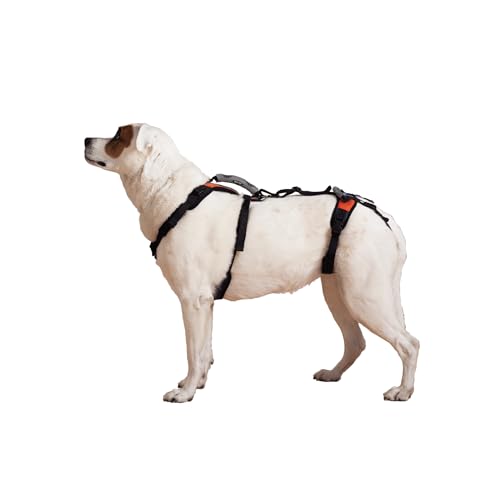
Help 'Em Up Full-Body Dog Support Harnesses
Front and rear support for total mobility assistance

Help 'Em Up Padded Dog Support Harnesses
Extra comfort for sensitive senior skin
Understanding Harness Types for Senior Dogs
The first step is understanding that "harness" covers a wide range of products with very different purposes. For a senior dog with mobility challenges, you are looking specifically for a support or lifting harness, not a standard walking harness.
Rear Support Harnesses
These are the most commonly needed type for senior dogs. They wrap around the hind end with a sturdy handle positioned over the hips, allowing you to lift and support your dog's back end. This is invaluable for dogs with hind leg weakness, hip dysplasia, arthritis in the hips or knees, or degenerative myelopathy.
A good rear support harness enables you to help your dog stand up, walk steadily, climb stairs, get into vehicles, and maintain their bathroom routine with dignity. The handle should be positioned so you can lift comfortably without bending too far, which matters when you are doing this multiple times a day.

Rear Support Harnesses
- GingerLead Dog Rear Support Sling Harness (M/LG Unisex) — Padded hip lifting aid with integrated leash, made in USA
- GingerLead Dog Support Harness (Large Male, 45+ lbs) — Rehabilitation sling harness for large dogs with hip or back issues
- Browse All Rear Support Harnesses on Amazon
Front Support Harnesses
Less common but important for dogs with front leg weakness, shoulder injuries, or conditions affecting the forelimbs. These wrap around the chest and front legs with a handle over the shoulders. They are also useful post-surgery for front leg procedures where the dog needs temporary support.
Full-Body Support Harnesses
Full-body harnesses wrap around both the front and rear of the dog with handles over both the shoulders and hips. They are designed for dogs who need support everywhere, not just one end. These are the most comprehensive option but also the most complex to fit and use.
Some full-body harnesses are modular, allowing you to attach and detach the front and rear components independently. This flexibility is valuable for dogs whose needs change from day to day or as their condition progresses.
Full-Body Support Options
- Full-Body Dog Support Harnesses - Front and rear support in one system
- Full-Body Dog Lifting Harnesses - Comprehensive lifting assistance
Sling-Style Harnesses
Slings are the simplest form of support harness. They consist of a broad fabric panel that goes under the dog's belly or hips with handles on each end. You hold the handles to lift and support your dog. Slings are affordable, easy to use, and work well for short-term or occasional support needs.
The limitation of slings is that they require you to hold them the entire time, tying up both your hands. For longer walks or situations where you need your hands free, a structured harness with handles is more practical.
Dog Slings
- Dog Support Slings - Simple, affordable lifting assistance
Key Features to Look For
Padding
Senior dogs have thinner skin that is more susceptible to friction and pressure injuries. A well-padded harness distributes force over a larger area and reduces the risk of chafing. Look for padding made from neoprene, fleece, or dense foam. The padding should be consistent throughout the areas that contact your dog's body, with no exposed buckles, seams, or hard edges touching the skin.
Handle Design
The handle is what you grip to lift and support your dog, so its design matters for your comfort as much as theirs. Look for handles that are padded, wide enough to grip comfortably, and positioned at a height that does not require you to bend uncomfortably. Some harnesses have multiple handle positions for different activities.
The handle should be rigid enough to provide control when lifting but not so stiff that it digs into your hand during extended use. A few minutes of holding a handle during a walk can reveal design flaws that are not obvious at first glance.
Adjustability
Every dog's body is different, and a harness that fits properly will need adjustment at multiple points. Look for harnesses with adjustable straps at the chest, belly, and leg openings. The more adjustment points, the more precisely you can fit the harness to your dog's unique proportions.
This is especially important for senior dogs who may lose muscle mass over time, requiring the harness to be tightened as their body changes.
Ease of Use
You will be putting this harness on and taking it off multiple times a day. It should be simple enough that you can do it quickly without frustrating your dog. Velcro closures, snap buckles, and step-in designs are generally the easiest to manage. Avoid harnesses that require your dog to step through leg holes, as this can be difficult or impossible for dogs with mobility limitations.

Washability
Support harnesses get dirty. They contact the ground, pick up mud and grass, and may be soiled during bathroom breaks. Look for harnesses that are machine washable or at least easy to hand wash and quick to dry. Having two harnesses and rotating them can ensure you always have a clean one ready.
Reflective Elements
If your dog needs harness support during early morning or evening walks, reflective strips or stitching improve visibility. This is a nice-to-have rather than essential, but it adds safety during low-light outings.
Sizing Your Dog for a Support Harness
Proper sizing is critical. A harness that is too loose will not provide effective support, and one that is too tight will be uncomfortable and may restrict breathing or movement.
Measurements You Will Need
- Girth: Measure around the widest part of the chest, just behind the front legs.
- Weight: Your dog's current weight determines the weight capacity needed.
- Hip width: For rear support harnesses, measure the widest point across the hips.
- Length: Some harnesses require the distance from the base of the neck to the base of the tail.
Fitting Tips
When the harness arrives, put it on your dog and check these points:
- You should be able to fit two fingers between the harness and your dog's body at any point.
- The harness should not ride forward and put pressure on the throat.
- The handle should sit directly over the area that needs support, not shifted to one side.
- Your dog should be able to walk, sit, lie down, and go to the bathroom without the harness interfering.
- There should be no bunching, rubbing, or gaps in the padding.
Using a Support Harness Effectively
Standing Up
One of the most common uses. When your dog wants to stand, position yourself beside them, grip the harness handle, and lift gently as they push up with their front legs. The goal is to provide just enough support that they can do the rest themselves. Over-lifting can make them passive and reduce the muscle engagement they need to maintain.
Walking
For walks, keep light contact with the handle so you can provide support instantly if your dog stumbles or their legs weaken. You do not need to lift constantly; just having your hand on the handle and being ready to support is enough for many dogs. This preserves their independence while providing a safety net.
Stairs and Vehicles
Stairs and vehicle loading are where support harnesses really earn their value. Lift the hind end to reduce the weight your dog's back legs need to carry while climbing. For vehicle loading, combine the harness with a ramp for the safest approach. Support the back end with the harness while your dog walks up the ramp.
Bathroom Breaks
Many senior dogs need support to maintain the squat position during bathroom breaks. A rear support harness lets you hold their back end at the right height while they do their business. This preserves their dignity and prevents falls during a vulnerable moment.
Caring for Your Dog's Skin Under the Harness
Even the best harness can cause skin issues if worn too long or if the skin is not monitored. After each use, check the areas where the harness made contact. Look for redness, hair loss, rashes, or moist skin. If you notice any irritation, give that area a break from the harness and consider adding extra padding to the pressure point.
Keep the skin clean and dry under the harness. If your dog has thin or fragile skin, consider using a soft cotton t-shirt underneath the harness as an additional barrier. This simple trick can prevent a lot of friction-related irritation.
A good support harness is often the single most impactful purchase you can make for a senior dog with mobility challenges. It makes their daily routines possible, protects them from falls, and gives both of you the confidence to keep doing the things you enjoy together.
Related Guides
- How to Help an Old Dog Get Up - Techniques and products to combine with a support harness.
- Old Dog Back Legs Giving Out - Understand the causes of hind leg weakness that make a harness necessary.
- Managing Chronic Pain in Older Dogs - Pain management strategies to pair with mobility support.
Pet Insurance · Sponsored
Protect Your Senior Dog From Surprise Vet Bills
Senior dogs are more likely to face arthritis, lumps, dental disease, and sudden emergencies, and a single visit can run into the hundreds or thousands. Pet insurance can help you say yes to the care your dog needs without draining your savings. Get a free quote and see what coverage fits.
Frequently Asked Questions
What is the difference between a walking harness and a support harness for senior dogs?
A walking harness is designed to replace a collar for leash walks, distributing pulling force across the chest and shoulders. A support harness is designed to help lift and stabilize a dog with mobility issues, featuring handles that allow the owner to support the dog's weight. Senior dogs often benefit from support harnesses, which are purpose-built for mobility assistance.
Should I get a front support or rear support harness for my senior dog?
It depends on where your dog needs help. Rear support harnesses are the most common for senior dogs because hind leg weakness is the most frequent mobility issue. Front support harnesses help dogs with shoulder or front leg problems. Full-body harnesses that support both ends are available for dogs who need comprehensive assistance.
How do I know if my senior dog needs a support harness?
Signs that your dog could benefit from a support harness include difficulty standing up from a lying position, wobbling or swaying while walking, reluctance to climb stairs or get into vehicles, hind legs giving out during walks, and needing help to squat for bathroom breaks. If you find yourself regularly lifting or steadying your dog, a support harness will make that easier and safer.
Can my dog wear a support harness all day?
Most support harnesses are not designed for all-day wear. They are typically used during walks, stair navigation, car loading, and other activities where your dog needs extra support. Some lighter designs can be left on for longer periods, but check the harness regularly for signs of rubbing or skin irritation. Remove the harness during rest periods.
What size support harness does my senior dog need?
Sizing varies by brand but typically requires measuring your dog's girth (around the chest behind the front legs), weight, and sometimes length. Measure while your dog is standing and the tape is snug but not tight. Always check the specific manufacturer's sizing guide, as a medium in one brand may differ significantly from another.
Are padded harnesses better for senior dogs?
Yes, padding is especially important for senior dogs. Their skin is thinner and more sensitive to pressure and friction. Padded harnesses distribute force more evenly and reduce the risk of chafing, which is particularly important in areas where the harness contacts bony prominences like the chest and shoulders.
Can I use a support harness to help my dog into the car?
Absolutely. This is one of the most common uses for support harnesses. The handle on a rear support harness lets you lift your dog's back end while they use their front legs to step into the vehicle. Combined with a ramp, a harness can make car loading safe and manageable for dogs of any size.
Need more help with your aging dog?
Browse our guides by topic to find practical solutions.
Wellness Planner — $39