Vestibular Disease in Dogs — Recovery Time and Care
Vestibular disease in dogs recovery time explained: what to expect in the first 72 hours, week by week timeline, and how to care for your dog at home.
Few things are more terrifying for a dog owner than watching their senior dog suddenly lose their balance, stumble, and fall. Their head tilts sharply to one side, their eyes dart rapidly back and forth, and they may be unable to stand or walk. Many owners rush to the emergency vet convinced their dog is having a stroke or that something catastrophic has happened.
In many cases, what they are seeing is vestibular disease, sometimes called "old dog vestibular syndrome." While the onset is dramatic and frightening, this is one of the more treatable neurological conditions in senior dogs, and the majority of dogs recover well with time and supportive care.
Support Products for Vestibular Disease


Haven Pet Insurance for Senior Dogs.Coverage for accidents, illness, and the chronic conditions that drive the biggest senior-dog vet bills. Get a fast, free quote using your dog’s breed, age, and zip, then see your monthly premium before you commit.Sponsored
Understanding the Vestibular System
To understand vestibular disease, it helps to know what the vestibular system does. Located in the inner ear and connected to the brain, the vestibular system is responsible for maintaining balance, spatial orientation, and coordinated eye movement. It tells your dog which way is up, helps them walk in a straight line, and keeps their eyes focused as they move their head.
When this system is disrupted, the result is intense disorientation, similar to what humans experience with severe vertigo. The world essentially spins, and the dog's brain receives conflicting signals about where their body is in space. This is why the symptoms can look so alarming, but it is important to understand that the dog is disoriented, not necessarily in severe pain.
What Vestibular Disease Looks Like
The hallmark of vestibular disease is its sudden onset. One moment your dog seems fine, and the next they are showing dramatic neurological symptoms. Most owners describe it as happening over the course of minutes, not hours or days.
The Classic Signs
- Head tilt: The head tilts noticeably to one side, often dramatically. This is usually the most persistent sign.
- Loss of balance: Your dog may stagger, fall to one side, or be completely unable to stand.
- Nystagmus: This is rapid, involuntary eye movement, usually side-to-side but sometimes rotational. It can be disorienting to watch and is a key indicator for your veterinarian.
- Circling: If your dog can walk, they may circle tightly in one direction.
- Nausea and vomiting: The intense disorientation often causes motion sickness, just as vertigo does in humans.
- Reluctance to eat or drink: Nausea and disorientation make eating and drinking difficult.
In severe cases, dogs may roll continuously to one side, unable to stop or right themselves. This is distressing to witness but does not mean the prognosis is worse. It simply reflects the intensity of the vestibular disturbance in the acute phase.
The Typical Timeline of Recovery
Understanding the usual timeline helps manage expectations and reduces the panic of the first few days.
Hours One Through Twenty-Four
The first day is typically the worst. Your dog may be unable to stand, may vomit, and will likely be very disoriented. The nystagmus is usually most pronounced during this period. Most dogs are seen by a veterinarian during this phase, which is appropriate and recommended.
Days Two Through Three
Many dogs begin showing improvement by the second or third day. The nystagmus often slows or resolves, and some dogs begin to stand with assistance. Appetite may start to return, and the nausea typically decreases. This is when many owners begin to feel cautiously optimistic.
Days Four Through Seven
Most dogs are able to walk with some unsteadiness by the end of the first week. They may still drift to one side and the head tilt is usually still present, but the improvement from the acute phase is often dramatic. Appetite and drinking habits usually normalize.
Weeks Two Through Four
Continued gradual improvement is the norm. Many dogs are walking well, eating normally, and returning to most of their routine activities. Some unsteadiness may persist, particularly on challenging surfaces. The head tilt often improves but may not fully resolve for weeks or months, if at all.

Veterinary Evaluation: Why It Matters
While idiopathic vestibular disease is the most common cause of these symptoms in senior dogs, other conditions can produce similar signs. Ear infections that reach the middle or inner ear, certain medications, hypothyroidism, brain tumors, and other neurological conditions can all affect the vestibular system.
Your veterinarian will perform a neurological examination to help determine whether the signs are consistent with peripheral vestibular disease (inner ear) or central vestibular disease (brain). Peripheral disease, which includes the idiopathic form, generally carries a much better prognosis. Your vet may recommend blood work, ear examination, and in some cases advanced imaging to rule out other causes.
Supportive Care at Home
Once your veterinarian has evaluated your dog and you are managing recovery at home, your focus shifts to keeping them safe, comfortable, and supported during the healing process.
Preventing Falls and Injuries
During the acute phase and early recovery, your dog's balance is severely compromised. Block access to stairs, remove obstacles they might bump into, and confine them to a small, padded area if they tend to stumble. A room with carpet or rug-covered floors is ideal. If your dog tends to roll, placing rolled towels or bolster pillows around them can help them stay in a comfortable position.
Safety and Support Products
- Washable Non-Slip Mats for Dogs - Secure footing during recovery
- Dog Support Harness for Rear Legs - Help your dog stand and walk safely
- Dog Lifting Harness for Senior Dogs - Assist with getting up and moving around
Helping with Eating and Drinking
Disorientation and nausea can make eating and drinking challenging. Hold water bowls steady at a comfortable angle, or offer water from a wide, stable dish placed on a non-slip surface. Elevated bowls can help if your dog is able to stand. If nausea is a problem, your veterinarian may prescribe anti-nausea medication. Small, frequent meals of appetizing food (slightly warmed can increase the aroma) are often more successful than large meals.
Managing Nausea
The dizziness associated with vestibular disease often causes nausea, particularly in the first few days. Your veterinarian may prescribe anti-nausea medication such as maropitant (Cerenia) to help your dog feel well enough to eat and drink. Keeping the environment calm and avoiding unnecessary movement can also help reduce nausea.
Providing a Calm Environment
Loud noises, busy household activity, and other pets can increase stress for a dog already dealing with disorientation. A quiet room with soft lighting and minimal foot traffic is ideal for recovery. Stay close enough that your dog knows you are there, but avoid fussing over them excessively, which can increase their anxiety.
Recovery Comfort Products
- Washable Dog Bed Pads - Easy cleanup during recovery when accidents happen
- Adjustable Elevated Dog Bowls - Make eating and drinking easier for unsteady dogs
Supporting Mobility During Recovery
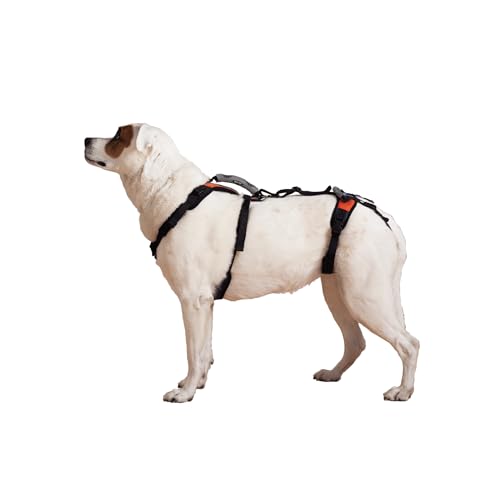
As your dog begins to regain their balance, a supportive harness can make a significant difference. A harness that wraps around the torso or hind end allows you to provide gentle stability as your dog walks, similar to holding someone's arm while they walk on an icy sidewalk. This prevents falls while allowing your dog to rebuild their balance and confidence.
Start with short, supported walks around the house. Gradually increase distance and decrease your support as your dog improves. Non-slip mats or runners placed along their walking paths provide traction and confidence.

The Lingering Head Tilt
One of the most common residual effects of vestibular disease is a persistent head tilt. While it often improves over weeks to months, some dogs retain a mild tilt permanently. This understandably concerns owners, but most dogs compensate remarkably well for a residual tilt. It does not typically affect their ability to eat, drink, walk, or enjoy their daily life. Think of it as a slight quirk rather than a disability.
When Recovery Does Not Follow the Typical Pattern
While most dogs improve steadily over the course of one to two weeks, some do not follow the expected pattern. If your dog shows no improvement after seventy-two hours, worsens after an initial improvement, develops new neurological symptoms, or has recurring episodes close together, follow up with your veterinarian. Additional diagnostics may be needed to investigate other potential causes.
Emotional Support for You and Your Dog
Vestibular disease is often more traumatic for the owner than the dog. Watching your beloved senior dog suddenly unable to stand is genuinely frightening, and the fear that this is the beginning of the end is completely natural. Take reassurance in the statistics: most dogs with idiopathic vestibular disease recover well and return to a good quality of life.
During the recovery period, your calm presence is therapeutic for your dog. They may not understand why the world is spinning, but they know you are there. Speak in a soothing voice, provide gentle physical contact, and maintain as much of their normal routine as possible. Your steadiness is the anchor they need while their vestibular system heals.
If you find yourself struggling emotionally during your dog's illness, reach out to friends, family, or online communities of senior dog owners who have been through the same experience. Sometimes just hearing that another dog recovered from an identical episode is the reassurance you need to get through the difficult first days.
Related Guides
- Common Health Problems in Senior Dogs - An overview of conditions affecting aging dogs including vestibular disease.
- How to Help an Old Dog Get Up - Techniques for assisting a dog with balance difficulties during recovery.
- Senior Dog Behavior Changes - Distinguish vestibular symptoms from other behavioral shifts.
Pet Insurance · Sponsored
Protect Your Senior Dog From Surprise Vet Bills
Senior dogs are more likely to face arthritis, lumps, dental disease, and sudden emergencies, and a single visit can run into the hundreds or thousands. Pet insurance can help you say yes to the care your dog needs without draining your savings. Get a free quote and see what coverage fits.
Frequently Asked Questions
What is old dog vestibular disease?
Old dog vestibular disease, also known as idiopathic vestibular syndrome, is a sudden disturbance of the balance system in senior dogs. It affects the vestibular apparatus in the inner ear, which controls balance and spatial orientation. The exact cause is unknown in most cases, which is why it is called idiopathic. It is one of the most common neurological conditions in older dogs.
Is vestibular disease in dogs a stroke?
Vestibular disease is often mistaken for a stroke because the symptoms can look similar, including a sudden head tilt, loss of balance, and falling. However, true strokes are relatively uncommon in dogs. Your veterinarian can help distinguish between vestibular disease and other neurological conditions. The good news is that vestibular disease typically has a much better prognosis than a stroke.
How long does vestibular disease last in dogs?
Most dogs show significant improvement within seventy-two hours, with the most dramatic improvement often occurring in the first forty-eight hours. Many dogs recover substantially within one to two weeks. Some dogs may have a lingering head tilt that persists for weeks, months, or permanently, but this usually does not affect their quality of life once they have compensated for it.
Can vestibular disease recur in dogs?
Yes, some dogs experience more than one episode of vestibular disease. Recurrences may happen weeks, months, or years apart. While a recurrence can be alarming, subsequent episodes are managed the same way and also tend to resolve. If episodes recur frequently, your veterinarian may investigate other potential underlying causes.
Should I take my dog to the emergency vet for vestibular disease?
If your dog has a sudden onset of symptoms like a severe head tilt, falling, rolling, rapid eye movement, and inability to stand, an emergency veterinary visit is reasonable, especially for the first episode. While vestibular disease itself is not life-threatening, these symptoms can also indicate other serious conditions that need to be ruled out. Your vet can also provide supportive care to help your dog through the worst of the episode.
Can I treat vestibular disease at home?
Supportive home care is a significant part of managing vestibular disease, but a veterinary evaluation is important to confirm the diagnosis and rule out other causes. Once your vet has confirmed vestibular disease, home care includes preventing falls, helping your dog eat and drink, managing nausea if present, and providing a safe and quiet recovery environment.
Does vestibular disease cause permanent damage in dogs?
In most cases of idiopathic vestibular disease, there is no permanent damage. The majority of dogs make a full or near-full recovery. Some dogs retain a mild head tilt, but this typically does not affect their daily function or comfort. They learn to compensate remarkably well. Dogs that have more severe or prolonged symptoms should be evaluated for underlying causes beyond the idiopathic form.
Need more help with your aging dog?
Browse our guides by topic to find practical solutions.
Wellness Planner — $39