Best Dog Beds for Large Senior Dogs (2026 Guide)
Best dog beds for large senior dogs over 75 lbs. Compared by foam thickness, durability, and washability. Giant breed sizing guide with top-rated picks.
The Unique Challenges of Bedding a Large Senior Dog
Large and giant breed dogs face a particular set of challenges as they age. Their sheer size means more weight on every joint, and the breeds that tend to be largest, such as Labrador Retrievers, German Shepherds, Golden Retrievers, Great Danes, and Mastiffs, are also among those most commonly affected by joint concerns as they grow older.
A bed that works perfectly for a 30-pound senior dog may completely fail a 90-pound one. The foam compresses more, the cover stretches and stresses at the seams, and the base sags under the greater load. For large senior dogs, the bed needs to be engineered to handle the weight while still providing the pressure relief that aging joints require.
This guide focuses on what specifically matters when choosing a bed for a large or giant breed senior dog, from foam specifications to construction durability to practical cleaning considerations.
Best Beds for Large Senior Dogs

Rainmr Extra-Large Orthopedic Dog Beds
Roomy memory foam beds for big breeds
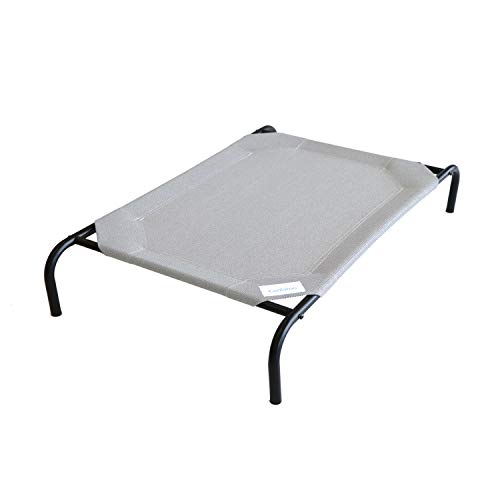
Coolaroo Elevated Dog Beds for Large Breeds
Raised design for easier getting up and down

Ceva Waterproof Dog Bed for Large Dogs
Easy-clean protection for incontinence issues
Rainmr Bolster Dog Beds for Large Breeds
Supportive edges for head and neck resting

Foam Thickness and Density: The Most Important Factors
For large senior dogs, foam thickness and density are not just nice-to-haves. They are the features that determine whether the bed actually works or simply looks good for a few weeks before compressing into a glorified floor mat.
Thickness
A large senior dog needs at least 6 inches of foam, and dogs over 100 pounds benefit from 7 to 8 inches. The reason is simple physics: a heavier dog compresses foam more deeply. If the foam is only 4 inches thick and your dog compresses it by 3 inches, they are essentially sleeping on a 1-inch pad over the hard floor. That provides almost no pressure relief and defeats the purpose of an orthopedic bed.
Density
Foam density, measured in pounds per cubic foot, indicates how much material is packed into the foam. Higher density means better support and longer lifespan. For large dogs, look for memory foam with a density of at least 4 pounds per cubic foot. The support base layer should be even denser, ideally 1.8 to 2.0 pounds per cubic foot for polyurethane support foam.
Low-density foam (under 3 pounds per cubic foot) may feel comfortable initially but will compress permanently within months under a large dog's weight. Spending a little more upfront on high-density foam saves money in the long run because the bed lasts significantly longer.
Layered Construction
The best beds for large senior dogs use a layered approach. A typical premium design includes a firm, high-density support foam base (2 to 3 inches) topped with a softer memory foam comfort layer (3 to 4 inches). The base prevents bottoming out while the top layer contours to your dog's body. Some beds add a gel-infused layer to help dissipate heat, which is useful because large dogs generate more body heat.
Durability and Construction Quality
Large dogs put more stress on every component of a bed, from the foam to the zipper to the fabric. Here is what to evaluate.
Cover Material
Look for heavy-duty fabrics like canvas, ballistic nylon, or tightly woven microfiber. These materials resist tearing, stretching, and pilling better than standard polyester covers. Reinforced stitching at the seams is also important, as the seams are where most bed covers fail under the weight and movement of a large dog.
Zipper Quality
A cheap zipper on a large dog bed is a recipe for frustration. Look for heavy-duty YKK-style zippers that extend along at least two sides of the bed for easy cover removal. The zipper should be recessed or covered with a fabric flap to prevent it from scratching your dog or catching on fur.
Base Material
The bottom of the bed should have a non-slip surface. For large dogs, this is especially important because the bed will shift significantly when a 90-pound dog stands up, turns, and lies back down. A rubberized or textured bottom prevents the bed from sliding across smooth floors.

Bed Styles for Large Senior Dogs
Flat Mat Style
Flat orthopedic mats without bolsters offer the easiest access for dogs with limited mobility. There is nothing to step over, and the dog can approach from any direction. These are the most practical choice for large senior dogs with significant joint stiffness. The trade-off is the absence of a headrest, though many dogs simply rest their head on the mat or nearby floor.
Three-Sided Bolster
A three-sided bolster provides a headrest and a cozy enclosed feeling while leaving one side open for easy entry. This design is popular because it combines comfort with accessibility. Make sure the open side is large enough for your dog to walk through without having to squeeze or step awkwardly.
Sofa-Style Bolster
Full bolster beds surround the sleeping area on all sides. While many dogs love the enclosed feeling, these can be difficult for large senior dogs to climb into. If your large dog is still relatively mobile and enjoys leaning against bolsters, this style can work. But if mobility is declining, a flat mat or three-sided design is usually more practical.
Our Top Picks for Large Senior Dogs
Best Thick Orthopedic Bed for Large Breeds
Look for beds marketed specifically for large breeds with 6 or more inches of layered foam, waterproof liners, and heavy-duty covers. Brands that specialize in large dog beds tend to use denser foam and reinforced construction.
Best Giant Breed Dog Bed
Giant breeds like Great Danes and Mastiffs need oversized beds (52 inches or larger) with extra-thick, high-density foam. These beds are a specialty category, but several quality options exist.
Best Elevated Bed for Warm Climates
Elevated cot-style beds with reinforced frames and breathable mesh keep large dogs cool by allowing air to circulate underneath. Look for beds rated for your dog's weight with steel or heavy-duty aluminum frames.
Cleaning a Large Dog Bed
Keeping a large dog bed clean is more involved than washing a small bed simply because of size. Most large dog bed covers will not fit in a standard home washing machine. Here are practical strategies.
- Use a commercial washer: Many laundromats have oversized washing machines that can handle large dog bed covers. A monthly trip to a laundromat can keep the cover fresh.
- Spot clean between washes: Use an enzyme-based pet cleaner to spot-treat stains and odors between full washes. Keep a spray bottle handy near the bed.
- Add a blanket layer: Draping a washable blanket or fitted sheet over the bed creates a barrier that catches most hair, drool, and dirt. Wash the blanket frequently and the bed cover less often.
- Vacuum regularly: Use a handheld vacuum or upholstery attachment to remove hair and dander from the bed surface between washes.
- Waterproof liners are essential: For large senior dogs, a waterproof liner between the foam and cover is critical. Large dogs are heavier, which means more pressure on any liquid that lands on the bed, pushing it deeper into the foam.
Positioning for Easy Access
Large senior dogs need clear, unobstructed paths to their beds. Place the bed against a wall so it cannot slide away when your dog lies down. Make sure there is enough room on all open sides for your dog to approach without squeezing past furniture. If the bed is in a room with hard floors, consider a runner rug from the doorway to the bed to give your dog traction on the approach.
For multi-story homes, having a bed on each level eliminates the need for your large senior dog to navigate stairs to reach a comfortable resting spot. This alone can make a meaningful difference in your dog's daily comfort and willingness to rest when they need to.
When Size and Age Intersect
Large breed dogs tend to age faster than smaller breeds, with many showing signs of aging by 6 to 8 years old compared to 10 to 12 years for smaller dogs. This means the window for proactive comfort measures is shorter, and many large breed owners find that upgrading to a quality orthopedic bed earlier, around age 5 to 6, sets their dog up for more comfortable later years.
The investment in a quality large-breed orthopedic bed is typically between 80 and 200 dollars, which is modest compared to many other aspects of large dog care. Given that your dog may spend 14 to 18 hours a day on this surface, it is one of the most cost-effective comfort upgrades you can make for an aging large breed companion.
Related Guides
- Best Orthopedic Beds for Older Dogs - General orthopedic bed guide with options for all sizes.
- Best Waterproof Dog Beds - Waterproof options for large senior dogs dealing with incontinence.
- Hip Dysplasia in Older Dogs - A common large-breed condition where the right bed makes a big difference.
Pet Insurance · Sponsored
Protect Your Senior Dog From Surprise Vet Bills
Senior dogs are more likely to face arthritis, lumps, dental disease, and sudden emergencies, and a single visit can run into the hundreds or thousands. Pet insurance can help you say yes to the care your dog needs without draining your savings. Get a free quote and see what coverage fits.
Frequently Asked Questions
What is the best bed for a large senior dog?
The best bed for a large senior dog is a thick orthopedic memory foam bed with at least 6 inches of high-density foam, a waterproof liner, and a removable machine-washable cover. Large dogs need extra thickness to prevent bottoming out, and senior dogs benefit from foam that contours to their joints.
How thick should a dog bed be for a 100-pound dog?
For a dog weighing 100 pounds or more, aim for a bed with at least 6 to 8 inches of foam. The foam should be high-density (4 to 5 pounds per cubic foot) to support the extra weight without compressing flat. A combination of a firm support base with a memory foam top layer works best.
Do large dogs need bolster beds or flat beds?
This depends on your dog's sleeping style and mobility. Flat beds without bolsters are easier for dogs with limited mobility to get on and off. Bolster beds provide a headrest and a sense of security, but the raised edges can be an obstacle for dogs with joint pain. Some beds offer a three-sided bolster with one open side as a compromise.
How often should I wash a large dog bed?
The cover should be washed every 1 to 2 weeks, or more frequently if your dog has incontinence or skin issues. Large dog beds generate more odor simply due to the larger surface area in contact with the dog. A waterproof liner beneath the cover helps keep the foam clean between washes.
Are elevated beds good for large senior dogs?
Elevated or cot-style beds can be good for large senior dogs in warm climates because they promote airflow underneath. However, they require the dog to step up onto the bed, which may be difficult for dogs with significant joint issues. If your large senior dog can easily step onto an elevated bed, it can be a good option for warm weather.
What bed dimensions should I get for a Great Dane or other giant breed?
Giant breeds like Great Danes, Mastiffs, and Saint Bernards typically need beds that are at least 52 by 36 inches, and some may need beds as large as 60 by 48 inches. Measure your dog lying stretched out and add at least 8 to 12 inches in each direction to determine the minimum bed size.
Need more help with your aging dog?
Browse our guides by topic to find practical solutions.
Wellness Planner — $39