Best Harness for Senior German Shepherds
Top support harnesses for senior German Shepherds with DM and hip dysplasia. Rear-lift, full-body, and no-pull options reviewed for 2026.
Watching your German Shepherd's back legs give out is one of the hardest experiences a dog owner can face. Whether it's degenerative myelopathy (DM), hip dysplasia, or age-related muscle wasting, German Shepherds are more susceptible to hind-end weakness than almost any other breed. A support harness can be the difference between your GSD giving up on walks and maintaining their quality of life for months or even years longer.
We've evaluated the best support harnesses specifically for the size, shape, and mobility challenges of aging German Shepherds. These aren't standard walking harnesses — they're therapeutic tools designed to help dogs with real mobility limitations.
Best Harnesses for Senior German Shepherds — Our Top Picks
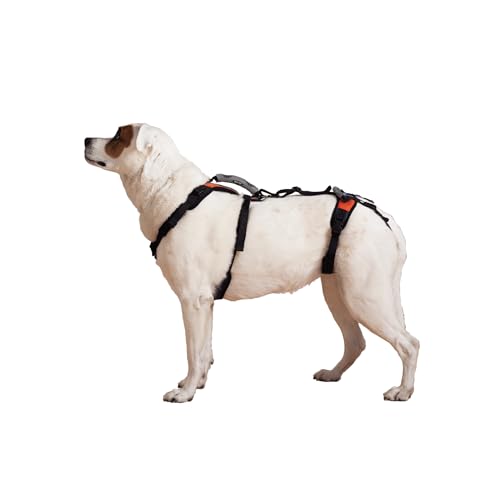
Help 'Em Up Help 'Em Up Harness (Full Body)
The gold standard for DM support. Front and rear harness with spine strap. Padded, ergonomic, machine-washable.

Ruffwear Ruffwear Web Master Harness
Secure three-point harness with handle for lifting. Padded, reflective, designed for active support.

PICK FOR LIFE GingerLead Rear Support Sling
Simple, effective rear-only sling for hind-end weakness. Padded belly strap with leash-style handle.
Help 'Em Up PetSafe CareLift Full Body Harness
Affordable full-body support with front and rear handles. Breathable mesh, fits 70-130 lbs.
Understanding GSD Mobility Challenges
German Shepherds face a perfect storm of mobility issues as they age. Understanding these conditions helps you choose the right harness type:
Degenerative Myelopathy (DM)
DM is a progressive spinal cord disease that affects German Shepherds more than any other breed. It begins with subtle hind-end weakness and progresses to complete rear-leg paralysis over 6-12 months. There's no cure, but proper support can maintain quality of life throughout the disease course.
Harness need: Full-body support with emphasis on rear-end lifting. As DM progresses, you'll need increasing hind-end assistance.
Hip Dysplasia
German Shepherds have one of the highest hip dysplasia rates among large breeds. In senior dogs, years of joint deterioration result in chronic pain, reduced range of motion, and difficulty rising from the ground.
Harness need: Rear-lift support for standing up, plus comfortable body support for longer walks.
Lumbosacral Stenosis
Compression of the nerves at the base of the spine is common in older GSDs. This causes pain when standing, reluctance to jump, and rear-leg weakness similar to DM.
Harness need: Full-body support that doesn't put pressure on the lower spine.

Best Overall: Help 'Em Up Harness
The Help 'Em Up Harness is the industry standard for dogs with DM and progressive mobility loss, and it's our top recommendation for senior German Shepherds. Designed by a veterinary rehabilitation professional, this harness provides true full-body support that evolves with your dog's changing needs.
How It Works
The system consists of two connected harnesses:
- Front harness: Wraps around the chest with a padded handle for front-end support and lifting
- Rear harness: Sits around the hips with a handle for rear-end support — this is the critical piece for DM dogs
- Spine strap: Connects front and rear harnesses, keeping everything aligned and allowing both to stay on all day
The key advantage of the Help 'Em Up is that it can stay on your dog 24/7 — including during sleep and bathroom breaks. Other harnesses need to be put on and removed each time, which is difficult with a wobbly 80-pound German Shepherd. With the Help 'Em Up, the handles are always right there when your dog needs assistance standing up or navigating stairs.
The harness is machine-washable, made from breathable materials, and padded at all contact points to prevent rubbing. The hardware is nickel-plated steel for durability.
Price range: $150-$200 depending on size. Worth every penny for a dog with progressive mobility disease.
Sizing Guide for German Shepherd Harnesses
- Female GSDs (50-70 lbs): Help 'Em Up Large, Ruffwear L/XL
- Male GSDs (65-90 lbs): Help 'Em Up Large or XL, Ruffwear XL
- Key measurement: Chest girth (widest point of ribcage) — most GSDs measure 28-34"
- Weight matters: Heavier dogs need harnesses with reinforced stitching and wider straps
Best for Active Walks: Ruffwear Web Master
If your senior German Shepherd still enjoys walks but needs occasional stability support, the Ruffwear Web Master is an excellent choice. This isn't a medical-grade support harness — it's a high-quality walking harness with a built-in handle that provides moderate lifting capability.
The three-point design (two chest straps plus a belly band) distributes force evenly and keeps the harness in place even during active movement. The padded chest and belly panels prevent chafing, and the reflective trim adds visibility for evening walks.
The built-in handle is reinforced for lifting and can support a good portion of your GSD's weight when needed. It's ideal for the early stages of mobility decline when your dog mostly walks independently but occasionally needs a steadying hand.
Price range: $50-$70 for XL.
Essential Companion Products
Ruffwear Ruffwear Grip Trex Dog Boots (Set of 4)
Protective boots for GSDs with knuckling. Prevents toe drag injuries. Non-slip Vibram soles.

Dr. Buzby's Dr. Buzby's ToeGrips for Dogs
Instant traction for slippery floors. Rubber rings fit over toenails. Ideal for GSDs with DM.
Best Budget: GingerLead Rear Support Sling
The GingerLead is a simple, effective solution for dogs with primarily hind-end weakness. It's a padded sling that wraps under your dog's belly/hips with a leash-style handle that you hold while walking. Think of it as a portable rear-end assist.
The GingerLead is:
- Easy to put on and remove — no buckles or complex straps
- Comfortable — wide, padded belly strap distributes lifting force
- Adjustable — fits dogs from 35-100+ lbs depending on model
- Gender-specific designs — male and female versions with different cutouts for bathroom breaks
The trade-off is that it only supports the rear end and must be held by you at all times. It can't stay on the dog between walks. For GSD owners on a budget who need basic rear-end lifting support, it's an excellent starting point.
Price range: $55-$75 depending on size.
Best Affordable Full-Body: PetSafe CareLift
The PetSafe CareLift offers full-body support at roughly half the price of the Help 'Em Up. It features padded front and rear lifting handles with a belly support strap that distributes weight across your dog's torso.
While it's not quite as refined as the Help 'Em Up (it can't comfortably stay on all day), it provides solid support for specific activities like getting into the car, navigating stairs, or walking to and from the yard. The breathable mesh material keeps your GSD cool, and it's machine-washable.
Price range: $30-$50 for the full-body large version.

When a Harness Isn't Enough

Walkin' Wheels Walkin' Wheels Rear Wheelchair (Large)
When a harness isn't enough — adjustable rear wheelchair for GSDs with advanced DM or paralysis.

DOK Non-Slip Dog Socks (Set of 4)
Indoor traction socks for GSDs slipping on hardwood. Rubber grips on bottom. Stays on with Velcro.
How to Use a Support Harness Effectively
- Support, don't carry. Use the harness to provide stability and assistance, not to bear your dog's full weight. Let your GSD use their own muscles as much as possible to slow muscle wasting.
- Watch for rubbing. Check under the harness daily for any signs of skin irritation. Pad any pressure points with moleskin if needed.
- Keep walks short and frequent. Multiple 5-10 minute walks are better than one long walk for dogs with mobility issues.
- Use on all surfaces. Your GSD needs the most help on slippery floors (tile, hardwood) and uneven terrain. Always have the harness available in these situations.
- Pair with traction aids. Combine the harness with toe grips or non-slip boots for maximum stability on smooth floors.
For comprehensive care guidance for your aging German Shepherd, read our Senior German Shepherd Care Guide. If your GSD also needs a supportive bed, see our best beds for senior German Shepherds review. For more mobility aids and solutions, explore our mobility section.
Mobility Essentials for Senior German Shepherds
- Lifting Harnesses for Large Dogs — Support your GSD's hips during walks and transitions
- Non-Slip Dog Socks — Prevent slipping on hardwood and tile floors
- Joint Supplements for Large Breeds — High-dose glucosamine for German Shepherd joints
Pet Insurance · Sponsored
Protect Your Senior Dog From Surprise Vet Bills
Senior dogs are more likely to face arthritis, lumps, dental disease, and sudden emergencies, and a single visit can run into the hundreds or thousands. Pet insurance can help you say yes to the care your dog needs without draining your savings. Get a free quote and see what coverage fits.
Frequently Asked Questions
What is the best harness for a German Shepherd with DM?
The Help 'Em Up Harness is widely considered the best option for German Shepherds with degenerative myelopathy. It features both a front and rear harness connected by a spine strap, allowing you to support the hind end while walking. The rear handle provides instant lifting support when the back legs buckle.
How do I know if my German Shepherd needs a support harness?
Signs your GSD needs a support harness include: difficulty standing up from lying or sitting, back legs crossing or knuckling while walking, wobbling or swaying in the hind end, reluctance to climb stairs or jump into cars, and dragging the back feet. These symptoms often indicate DM, hip dysplasia, or spinal issues.
Can a harness replace a wheelchair for my senior German Shepherd?
A harness is typically used in the early to mid stages of mobility decline, while wheelchairs are needed in later stages. Many owners use a support harness first and transition to a wheelchair as the disease progresses. Some dogs benefit from both — a harness indoors and a wheelchair for longer outdoor walks.
What size harness does a German Shepherd need?
Most German Shepherds need a Large or XL harness. Measure your dog's chest girth (around the widest part of the ribcage) and weight. Males typically measure 28-34 inches around the chest and weigh 65-90 lbs. Always check the manufacturer's specific sizing chart, as sizes vary significantly between brands.
Is a rear-only or full-body harness better for my GSD?
For DM or hip dysplasia, a full-body harness is generally better because it provides support for both the front and rear. However, if your GSD only has hind-end weakness, a dedicated rear-lift harness or sling provides more targeted support and is easier to put on and take off.
How do I get my German Shepherd used to wearing a harness?
Introduce the harness gradually. Let your GSD sniff it first, then drape it over their back with treats. Progress to fastening it loosely, then fully, over several sessions. Use high-value treats throughout. Most GSDs accept a harness within 3-5 training sessions if the introduction is positive and pressure-free.
Will a harness hurt my German Shepherd's joints?
A properly fitted harness should not cause joint pain. In fact, it reduces joint strain by distributing weight and providing stability. Ensure the harness doesn't rub under the armpits, doesn't restrict shoulder movement, and doesn't put pressure on the spine. Padded straps and breathable materials minimize irritation.
Need more help with your aging dog?
Browse our guides by topic to find practical solutions.
Wellness Planner — $39